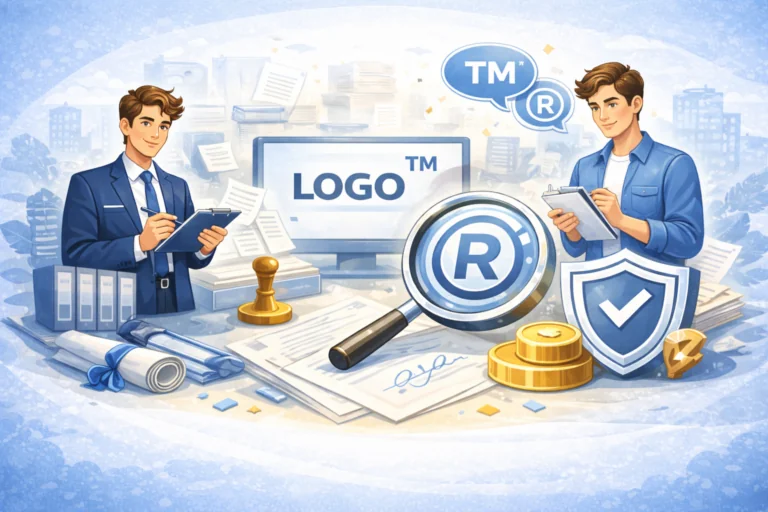
Registering a trademark gives you the exclusive right to the sign for the goods and services listed in the register. Before registration, you do not have an exclusive right to the sign as a trademark, even if you came up with the name first, launched a website and invested in advertising.
That is the main reason to register a trademark. Without registration, it is difficult to stop a competitor using a similar sign for the same goods or services.
What is a trademark?
A trademark is a sign that distinguishes one business’s goods or services from another’s. Examples include a brand name, a logo, a slogan and a combined sign consisting of text and graphics.
A Russian national trademark generally gains protection through state registration with Rospatent. Separate rules apply to international registrations protected in Russia and to marks officially recognized as well known. A logo may also be protected by copyright or other rights. Trademark registration does not replace those rights.
Does using a name give you trademark rights?
Businesses sometimes assume that using a brand automatically gives them ownership. A domain name, registration as a limited liability company or individual entrepreneur, social media accounts and long use of the name do not confer trademark rights.
If a sign is unregistered, someone else may register it, leading to a dispute. Whether the other party acted in good faith and whether earlier rights exist are separate questions.
1. Legal protection for the brand
A registered trademark gives you an exclusive right you can enforce in several ways.
- Use the brand in your area of business.
- Stop competitors using confusingly similar signs.
- Seek removal of copies and counterfeits.
- Enforce the right in court.
Registration helps establish who holds the exclusive right to the sign.
2. Protection against copying and registration by someone else
Consider a business that has promoted its brand, spent money on advertising and become recognizable. Another company then registers the same brand in its own name.
That company may demand a name change, seek to stop use on a website, try to block sales or claim compensation. Whether those demands are valid depends on the dispute, including whether registration was made in good faith and whether earlier rights exist.
3. Room to grow
Registration can help as your brand grows. It is not a general requirement for operating a business lawfully.
You may need evidence of registration if you intend to establish rights to the brand on an online marketplace, grant use of the mark under a franchise agreement, license the trademark, attract investment or sell your business or brand.
For business partners and investors, a registered trademark is evidence of rights to a specific sign.
4. Trust with customers and partners
Registration records your rights to the sign in the public register, shows that the brand is protected and signals an intention to develop it over time. In areas such as technology, e-commerce, education and services, this can strengthen confidence and influence purchasing decisions.
5. Lower costs later
Putting off registration can lead to higher costs later. You may have to change the name after a refusal or claim, redesign your website, advertising and packaging, rebuild brand recognition, or deal with court disputes and fines. Registering early is usually less expensive than any of those scenarios.
6. A brand asset you can use commercially
A registered trademark is an asset. You can license it, sell it, use it in a franchise or take it into account when valuing the company. An unregistered brand may still have commercial value, but protecting it requires an assessment of other rights and the circumstances.
7. Protection online and on marketplaces
With a registered trademark, you can submit substantiated infringement complaints, seek removal of counterfeits, report infringers and protect the brand in advertising and domain name disputes. Your options are much more limited without a registration.
Why file early?
Many businesses consider registration only after receiving a claim from a rights holder, being turned down by a marketplace or entering a dispute with a competitor. At that point, the risks are higher, the process is more complex and registration cannot be guaranteed. It is better to file before you start actively promoting the brand.
Why use end-to-end support?
Trademark registration involves more than filing an application. Mistakes often arise when selecting Nice Classification classes, carrying out a preliminary clearance search, drafting the list of goods and services or responding to examiners. Support throughout the process can lower refusal risks and save time.
What registration gives you
Trademark registration protects the brand, reduces business risks, helps the business grow and lets you dispose of the exclusive right. If you are building a business for the long term, plan your clearance search and filing before spending money on promotion.
See Articles 1477, 1484, 1490 and 1515 of the Russian Civil Code.